
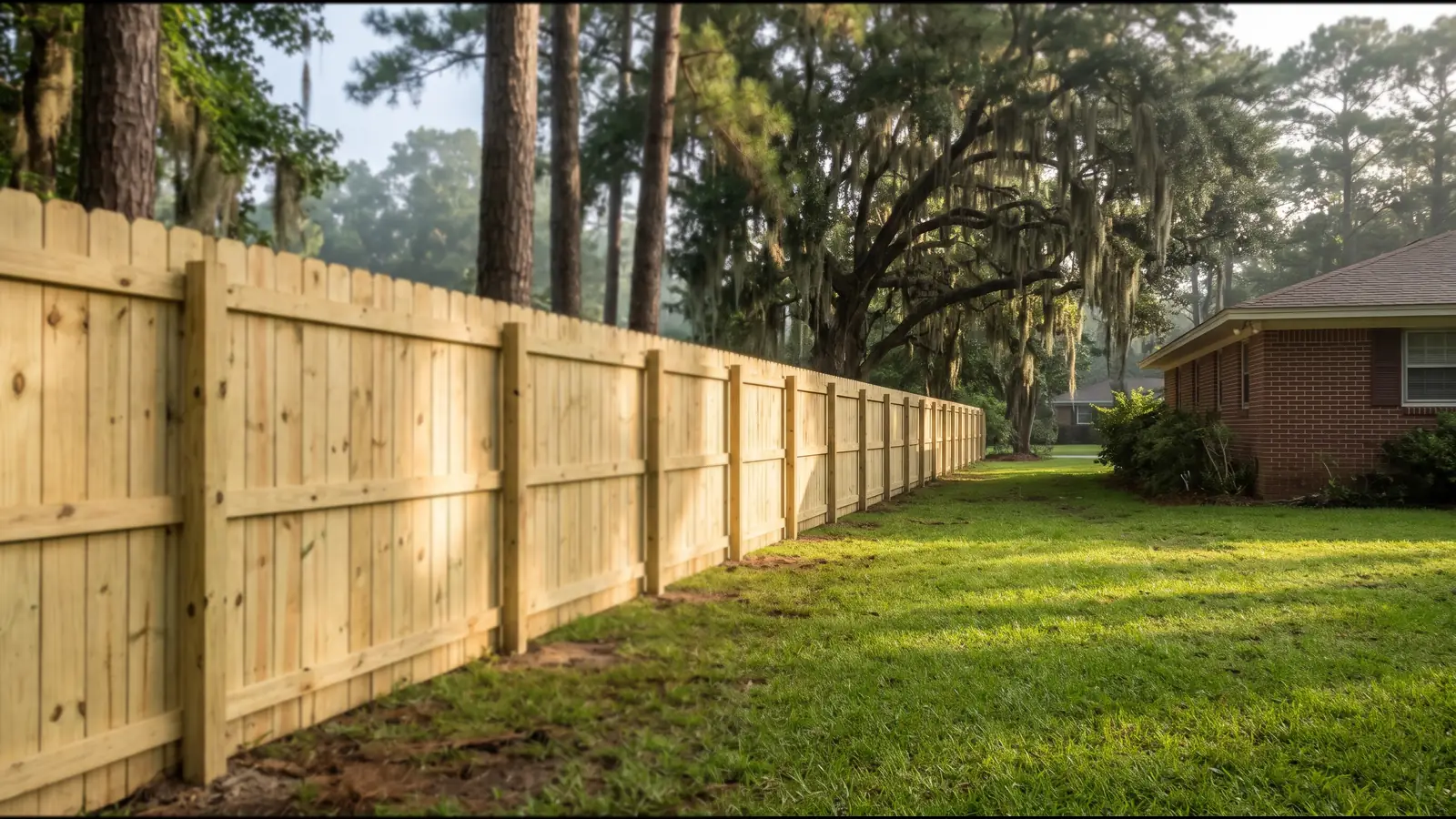
Pool Fence Types for Florida Backyards
Each option can meet Florida's barrier rule; they differ in price, looks and whether they come down.
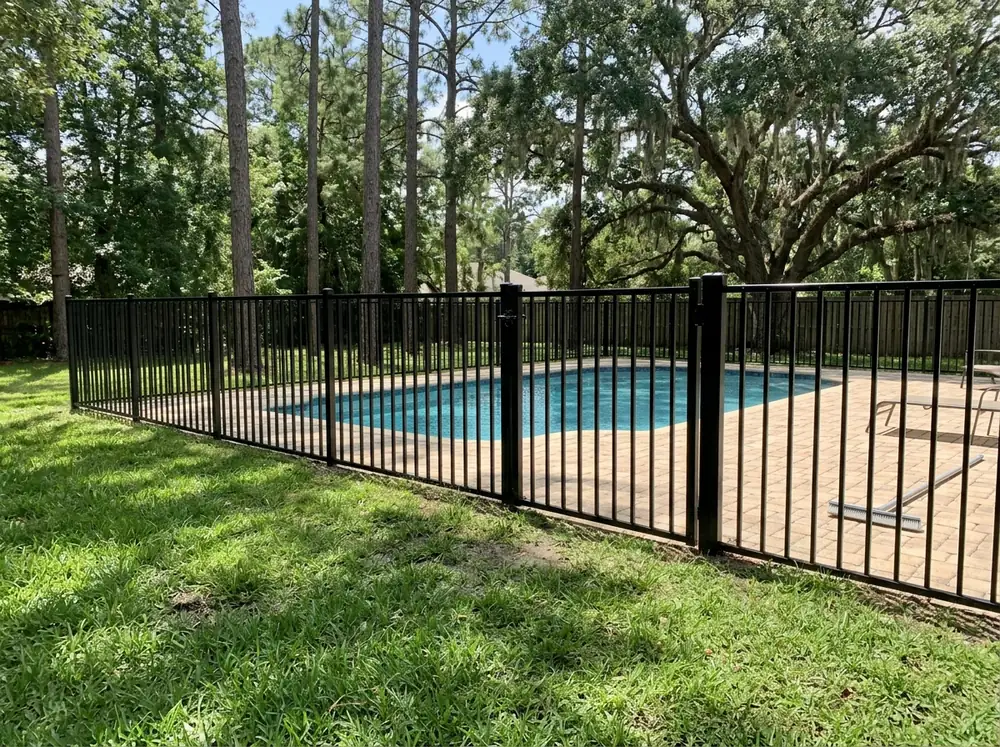
Aluminum Pool Fence
HomeGuide calls aluminum a very common pool fence material because it's easy to install, and installers like to set it while a new patio or pool deck is being poured. Expect about $30 to $45 a foot for a pool-height fence. The catch is picket spacing: rails and picket gaps have to meet the barrier numbers below, so ask for a panel sold as pool-code compliant. Taller yard-style aluminum fences are covered on Aluminum Fences.
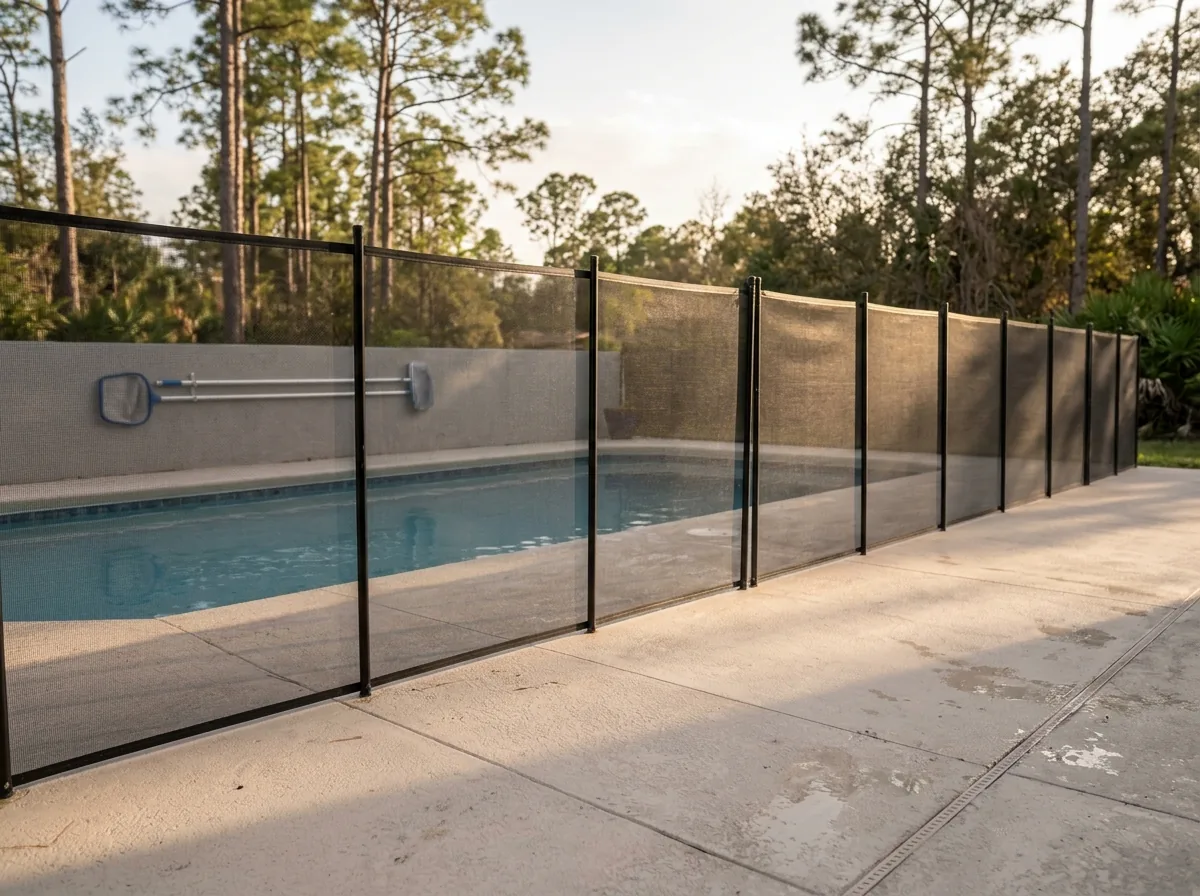
Removable Mesh Pool Fence
Safety mesh stretched between poles that can be lifted out. It's one of the cheapest barriers at $10 to $30 a foot, and the soft mesh gives a child nothing to grip. It can come down for a party or a pool service visit. It's also less durable and less secure than a fixed fence, and it only works while it's up. ASTM F2286 sets the design and performance requirements for removable mesh pool barriers.
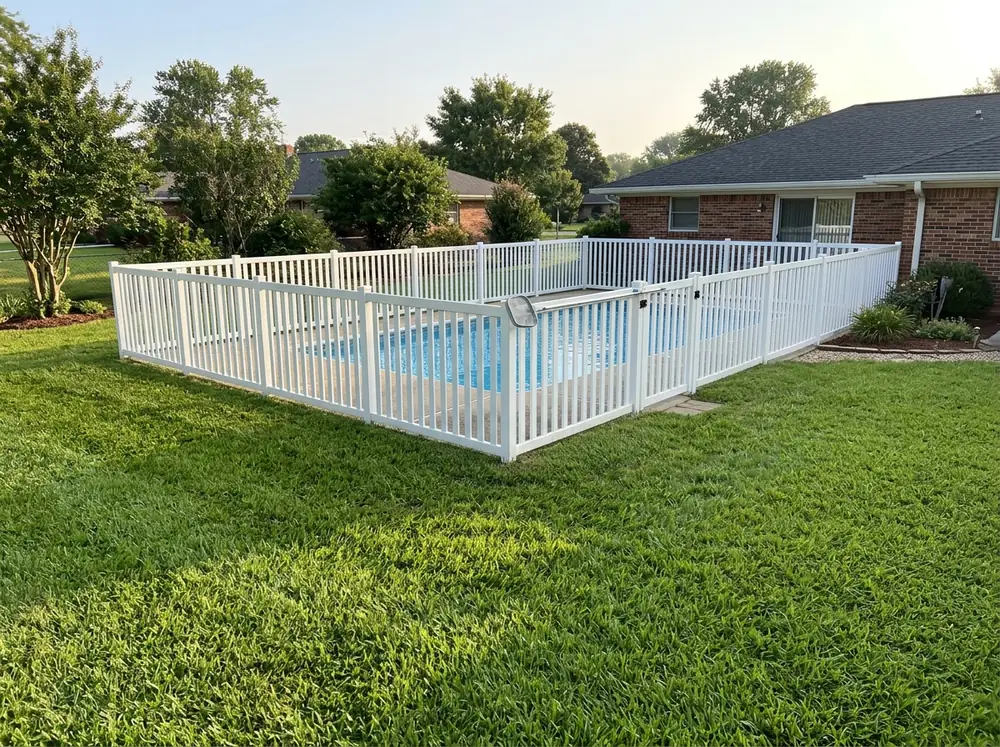
Vinyl Pool Fence
Vinyl pool fencing runs $30 to $45 a foot in picket or solid styles. It won't rust or need sealing near splash water, though it can crack on impact. A solid vinyl privacy fence can double as the pool barrier if it meets the height and gate rules, which suits a pool that sits close to a neighbor. More vinyl styles are on Vinyl Fences.
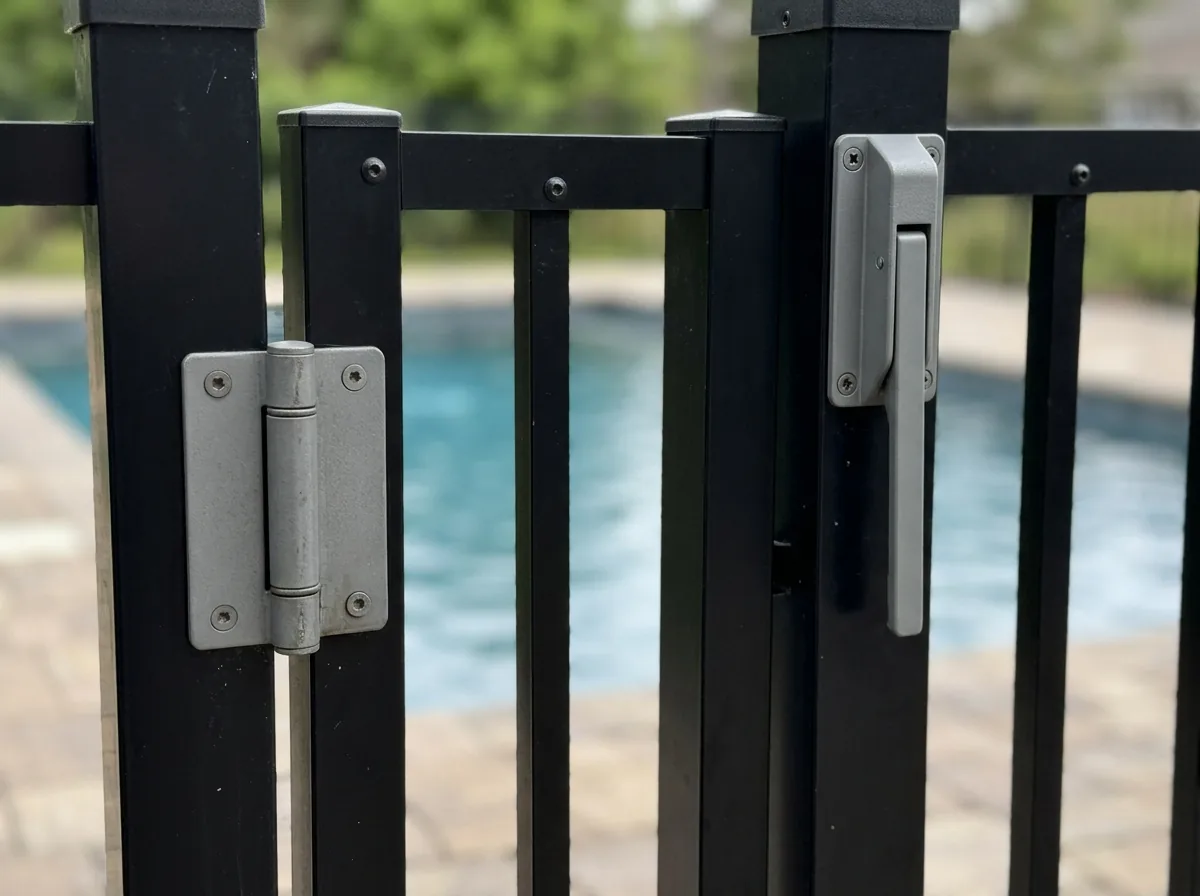
Pool Gates: Self-Closing and Self-Latching
A pool gate is the part that gets propped open, so the law spells it out. Under Florida law a pool gate has to:
- Open outward, away from the pool
- Close by itself
- Latch by itself, with the release on the pool side where a young child can't reach it over the top or through a gap
The building code lets the release sit on either side if it's at least 54 inches above the bottom of the gate. Magnetic self-closing, self-latching gate sets add $200 to $800 when the quote doesn't already include one. Test the gate every month: open it partway, let go, and watch it latch. A pool gate that no longer closes goes to Gate Repair first.
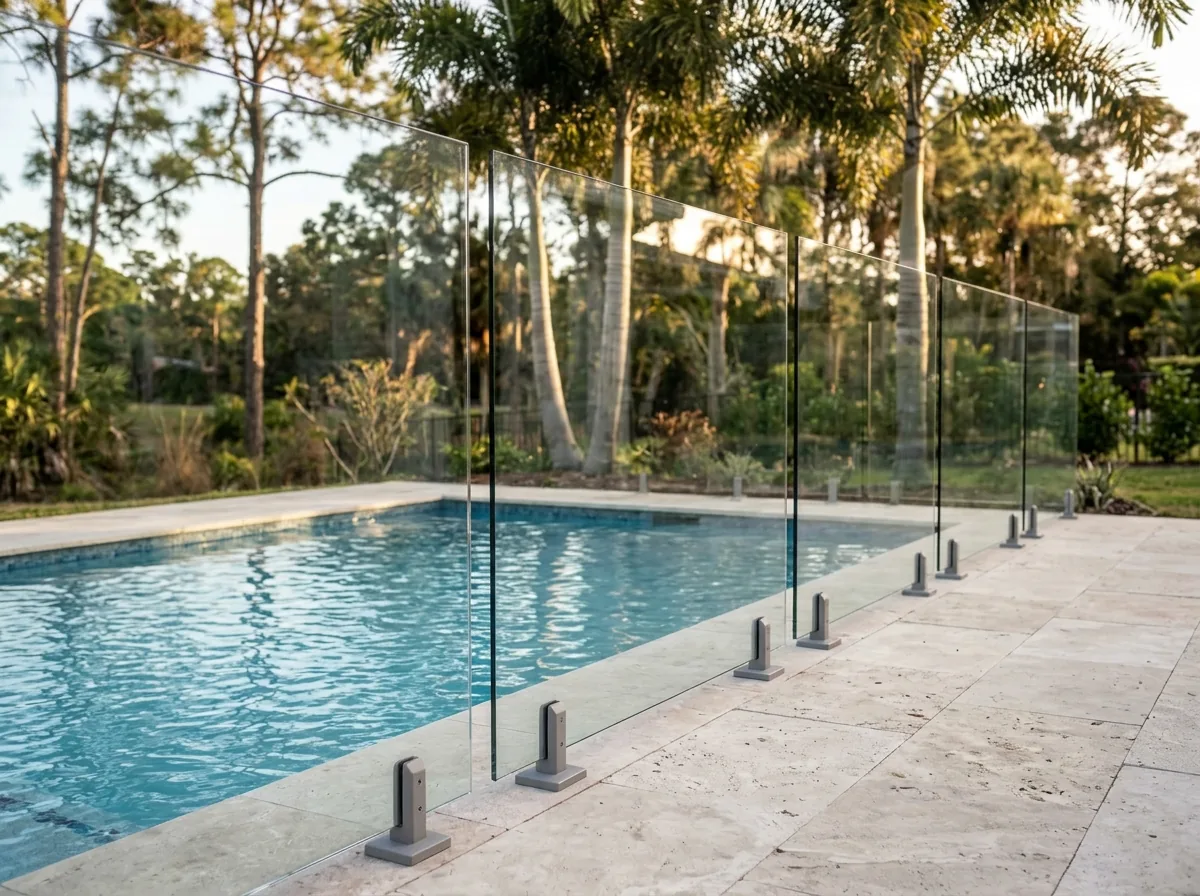
Glass and Picket-Style Pool Fence
Tempered glass keeps the view open and is hard to climb, at $120 to $500 a foot installed. Plexiglass looks similar for $25 to $40 a foot but can yellow and scratch over time. Wood or metal picket fences can also serve as barriers if the picket gaps meet the spacing limits below, and wood pool fencing runs $20 to $40 a foot.
Why Tallahassee homeowners call Tallahassee Expert Fencing
- The call and the form are free
- Your request goes to one contractor, not a list of bidders
- Ask for posts, gates, removal and cleanup priced line by line
- Hold the final payment until the gates swing and latch
Florida's Residential Pool Barrier Rule
Chapter 515 of the Florida Statutes sets the barrier rule for a home pool, and the Florida Building Code repeats it with measurements. In Florida, drowning is the leading cause of unintentional death for children ages 1 to 4, and the state health department says home pools are where most young children are likely to drown.
What counts. The law covers any residential pool, hot tub or nonportable spa holding water deeper than 24 inches. "Young child" means under 6.
The barrier itself (F.S. 515.29):
- At least 4 feet high, measured on the outside
- No gaps, openings, indentations or protrusions that let a young child crawl under, squeeze through or climb over
- Placed around the pool's perimeter and far enough from the water's edge that a child who gets through can't fall straight in
- A yard fence counts only where it stands on the pool's perimeter and meets every requirement
- A house wall counts only if no door or window in it opens onto the pool
- Nothing permanent, like equipment or a structure, positioned so it can be used to climb the barrier
The measurements (Florida Building Code, Residential, section R4501.17). These come from the code text quoted in a county building department's guide to an earlier edition; confirm against the current edition with your inspector.
| Item | Limit |
|---|---|
| Top of barrier | at least 48 in above grade, outside face |
| Gap at the bottom | 2 in maximum |
| Any opening | must not pass a 4 in sphere |
| Pickets, rails under 45 in apart | 1-3/4 in maximum gap, rails on the pool side |
| Pickets, rails 45 in or more apart | 4 in maximum gap |
| Chain link mesh | 2-1/4 in square maximum, unless slatted |
| Gate latch | release on pool side, or either side at 54 in or higher |
New pools. A new residential pool can't pass final inspection unless it has at least one of five safety features: a compliant barrier, an approved safety cover, exit alarms on doors and windows to the pool, self-closing self-latching devices on those doors with the release at least 54 inches up, or a pool alarm. A fence has one advantage over alarms: it works without anyone remembering to switch it on.
Pool Fence Prices by Material
National installed ranges, not quotes:
| Material | Per linear foot |
|---|---|
| Removable mesh | $10-$30 |
| Black chain link | $10-$29 |
| Wood | $20-$40 |
| Plexiglass | $25-$40 |
| Vinyl | $30-$45 |
| Aluminum | $30-$45 |
| Wrought iron | $50-$85 |
| Tempered glass | $120-$500 |
A fence around the deck alone is shorter than one on the property line, so price both layouts. For a pool in an HOA common area or apartment complex, see HOA and Apartment Fencing.