
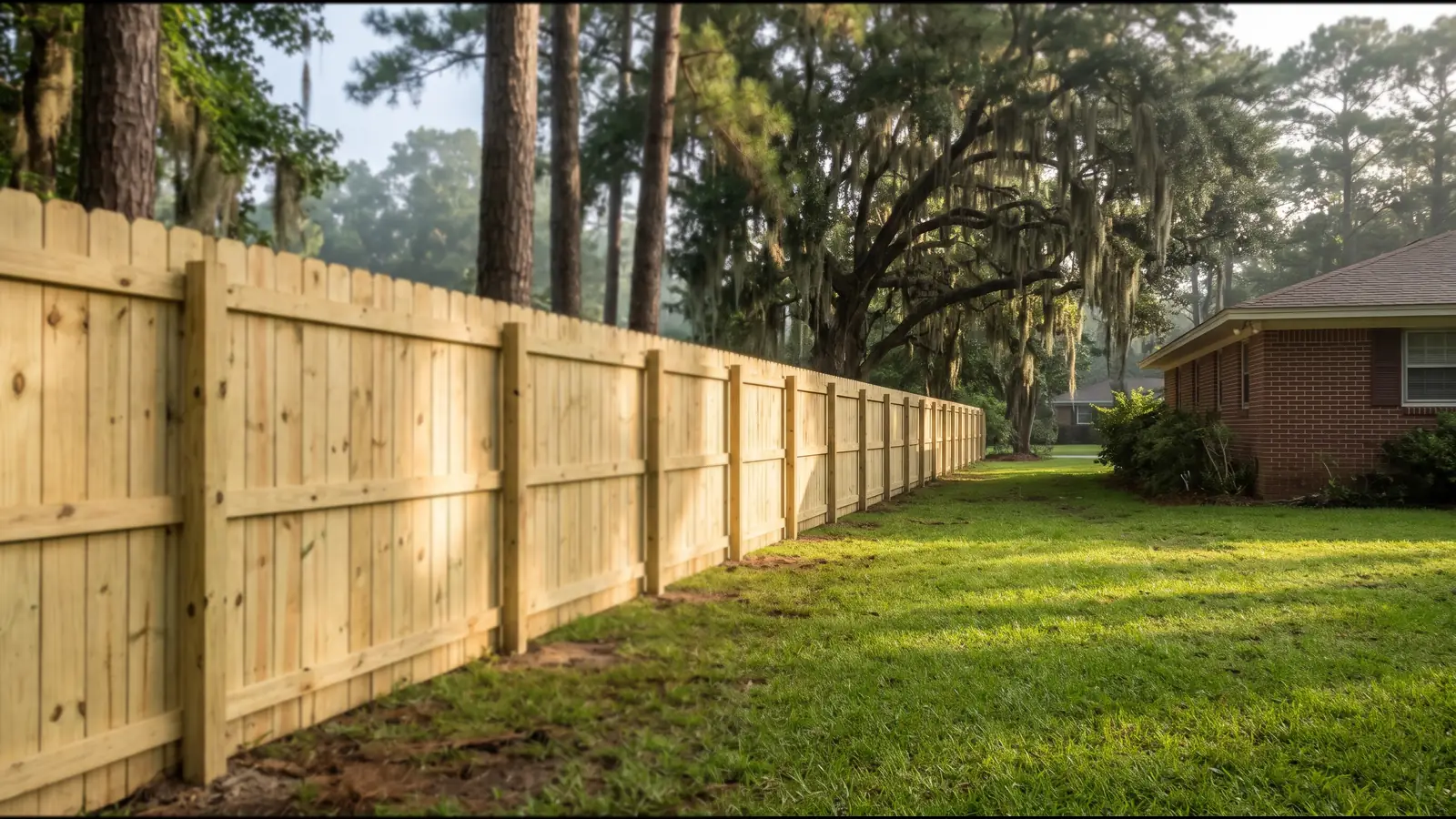
Sports Field and Playground Fence Types
Ball fields, courts and playgrounds each fence for a different reason. A backstop stops foul balls, a court fence keeps balls on the court, and a playground fence keeps small children in. The build follows from that.
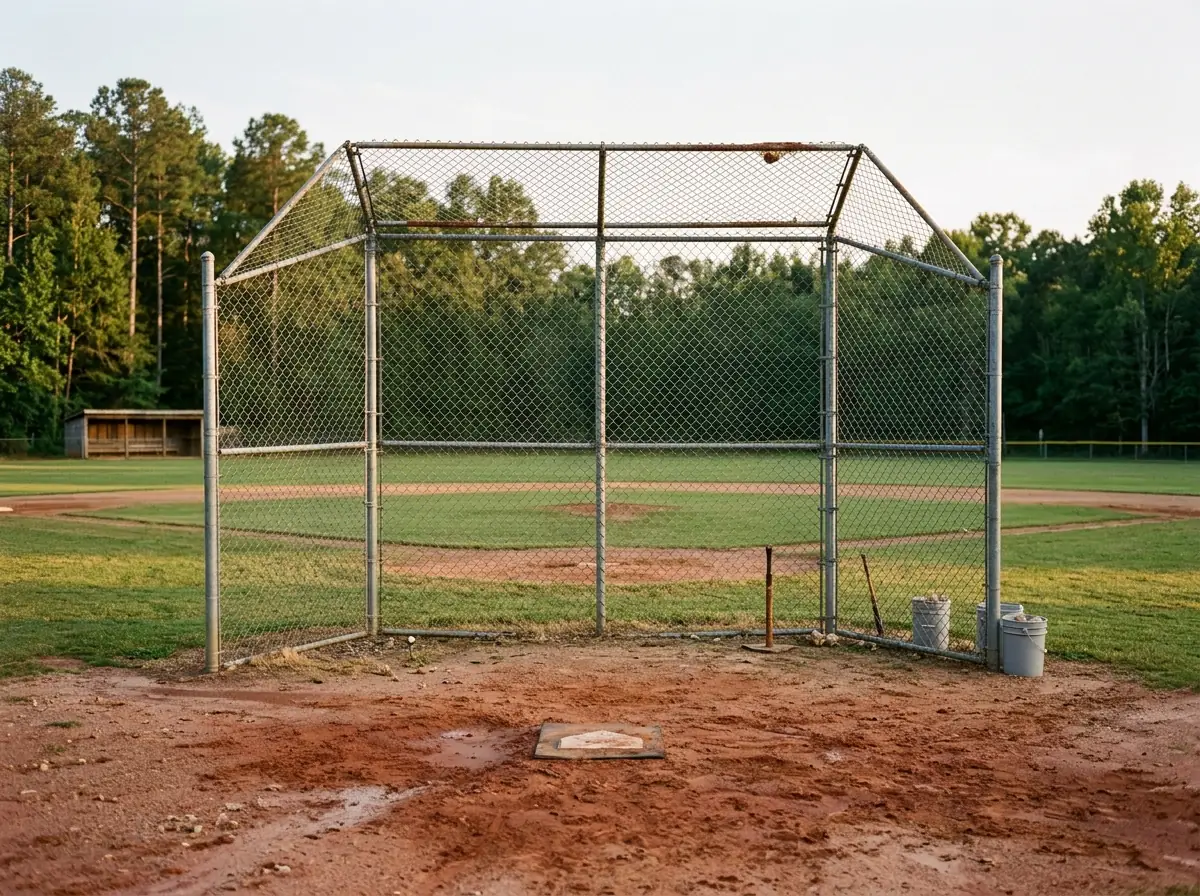
Baseball and Softball Backstops
A backstop is a tall panel of chain link behind home plate, often with angled wings toward the dugouts and a hood that leans forward at the top to catch pop-ups. Heavy posts and tight fabric matter more here than anywhere else on a field, because the fence takes direct hits all season. Field size depends on the age group, so send the league's field spec with the request rather than guessing at heights and distances.
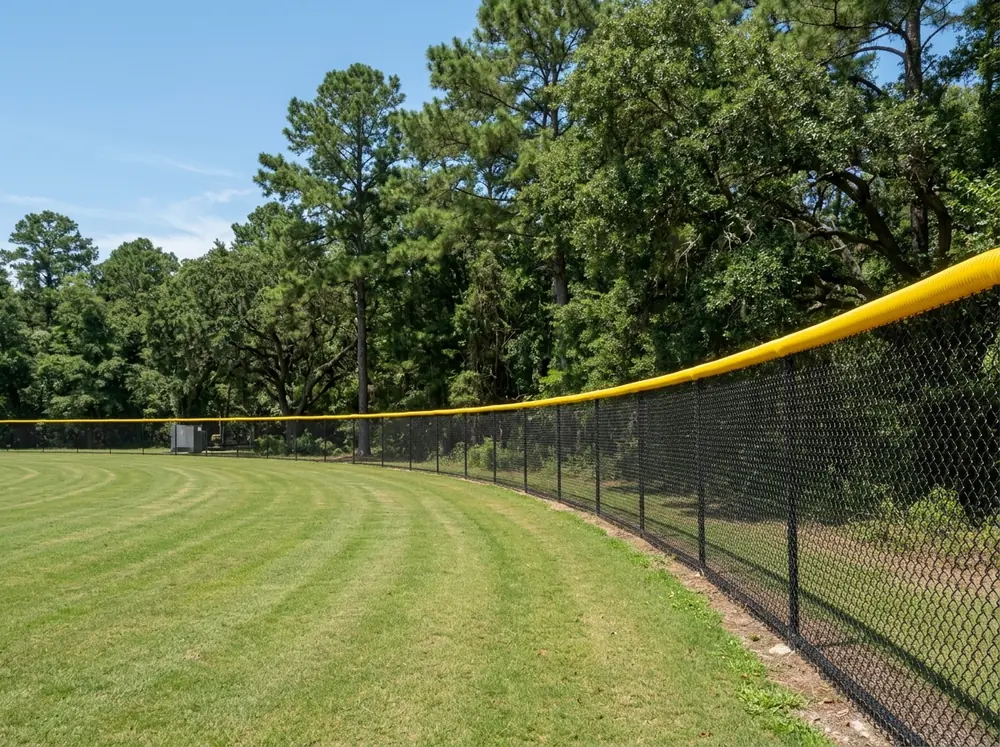
Outfield and Dugout Fence
Outfield fence is usually lower than the backstop and runs a long curve, so the price comes down to footage. A bright plastic cap along the top rail shows players where the fence is and covers the cut wire ends. Dugouts need a fence in front to protect the bench from line drives, with an opening at each end.
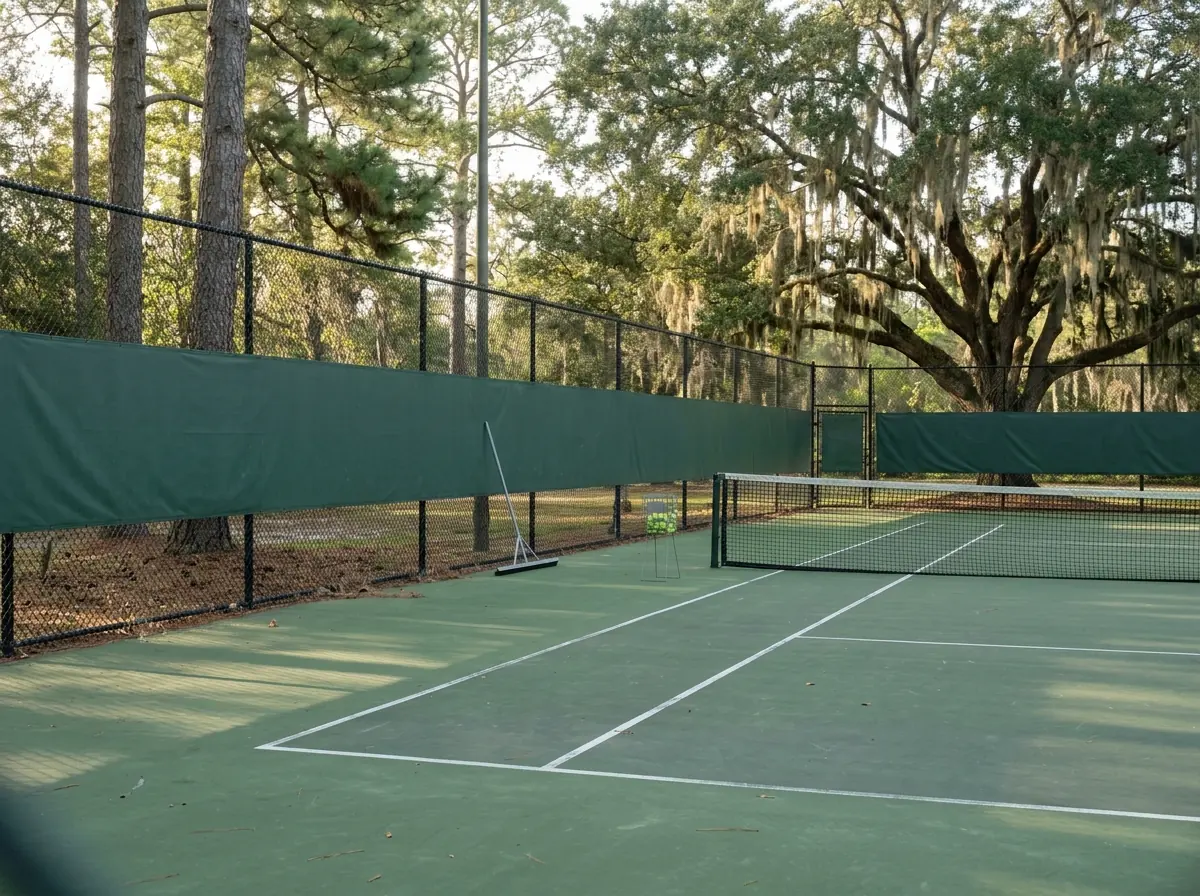
Tennis and Pickleball Court Fence with Windscreen
Court fence keeps the balls in. Guides call for 8 feet or more around a tennis court, with fence sides 60 to 120 feet long, at $4,300 to $10,800 a court. Around a pickleball pad, 8 feet is best, but a 4-foot fence with padding on top also works and costs less. Windscreen on the fabric, at $80 to $500, cuts the wind across the court. Coated court fabric runs $10 to $35 a foot.
Turning one tennis court into four pickleball courts costs about $5,000 to $20,000 in guides. Ask whether the existing fence can stay.
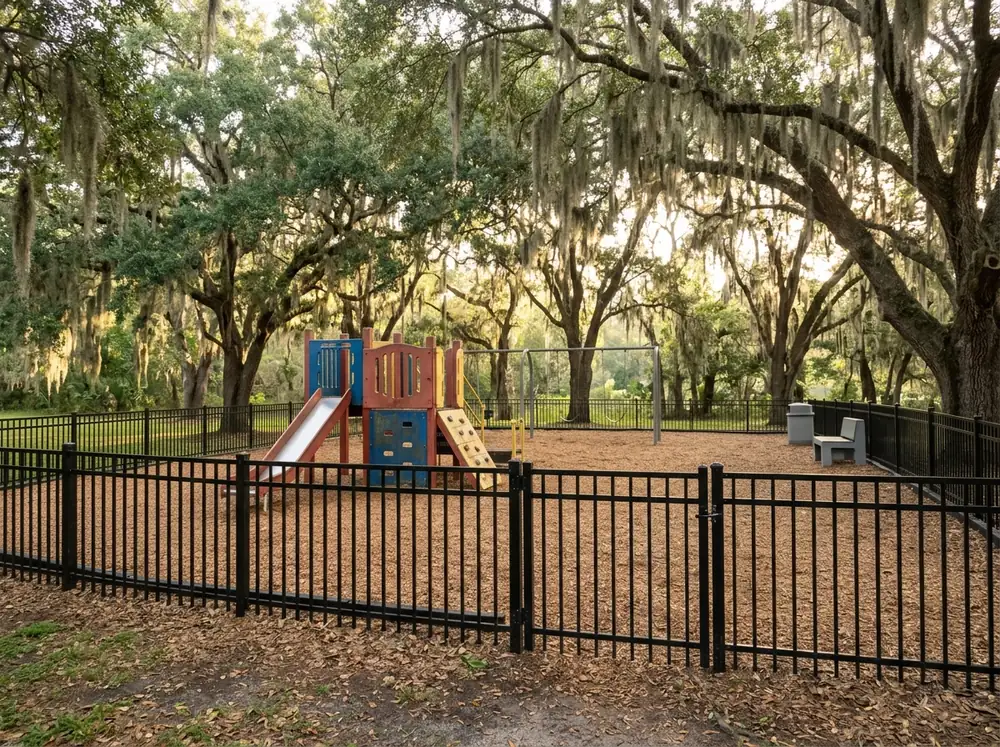
Playground Fence
The U.S. Consumer Product Safety Commission's playground handbook says a playground near traffic, a pond or a drop-off needs something to keep young children inside, a fence or a dense hedge, and supervisors must be able to see through it. Fences should meet local codes and ASTM F2049, the standard guide for fences around public, commercial and multifamily play areas. Ask the installer to work from F2049 and to put the gate latch above a small child's reach.
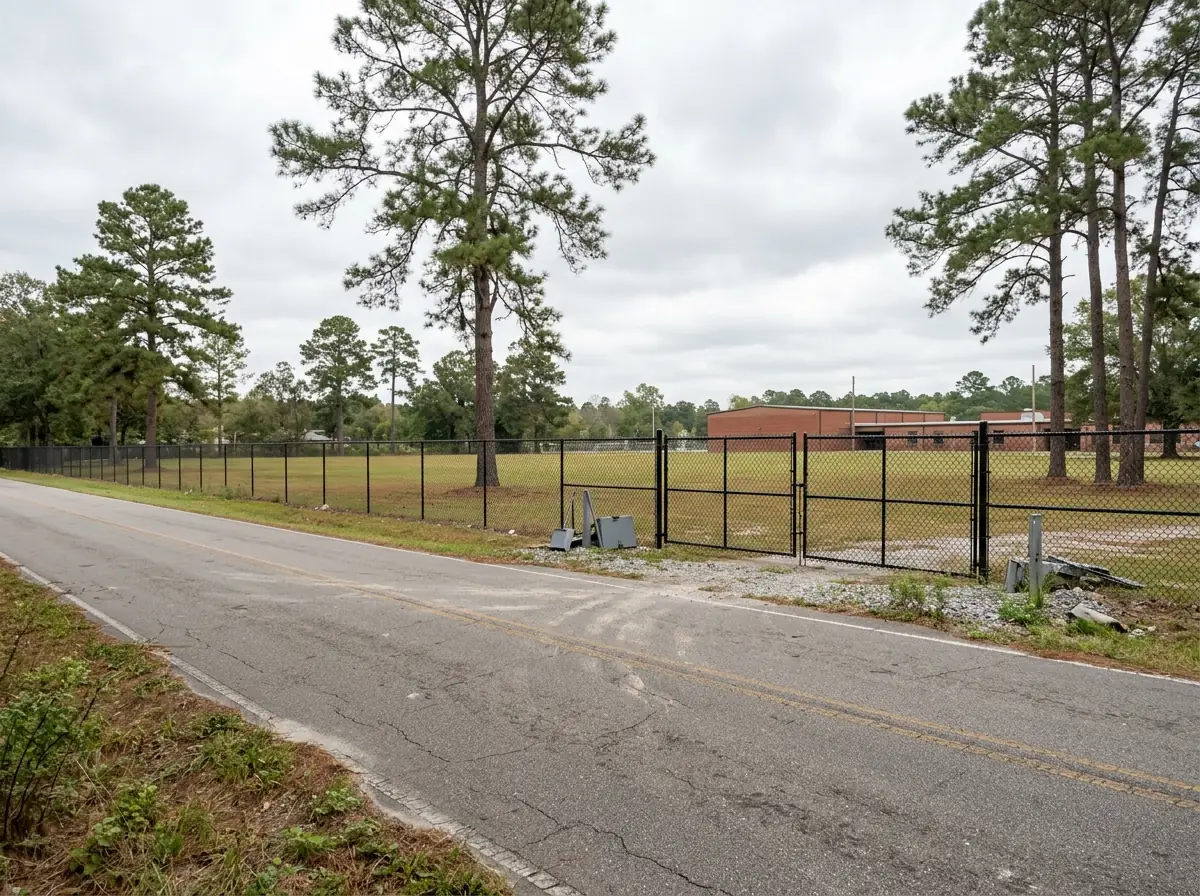
School and Church Perimeter
Schools and churches fence the edge of a campus so the grounds can be closed at night while staying open to the street in daylight. Large drive-through and pedestrian gates matter more than the fence itself, since they decide how people come and go on game nights and Sundays. For locked, access-controlled gates, see Commercial Fencing.
Why Tallahassee homeowners call Tallahassee Expert Fencing
- The call and the form are free
- Your request goes to one contractor, not a list of bidders
- Ask for posts, gates, removal and cleanup priced line by line
- Hold the final payment until the gates swing and latch
Court and Field Fence Costs From National Guides
| Item | Typical range |
|---|---|
| Tennis court fence, one court | $4,300-$10,800 |
| Pickleball court fence, 30 x 60 ft pad | $2,000-$6,000 |
| Vinyl-coated court fence | $10-$35 per linear foot |
| Windscreen | $80-$500 |
| Tennis court to four pickleball courts (whole conversion) | $5,000-$20,000 |
Backstop and outfield prices depend too much on height and footage for a guide range to help. Ask for a quote from the field drawing.
Planning a Field or Court Fence
Start from the governing spec
A league, school district or court builder often has a drawing with heights and gate spots. Send it.Think about mowing
A fence line set a mower's width off the field, or a concrete mow strip under it, saves hours of string trimming.Gate widths
Plan at least one gate wide enough for a mower or a maintenance cart, plus gates for players and spectators.Before digging
Post holes need a locate first; see Chain Link Fences for the 811 rules.Payment and paperwork
A contract over $2,500 runs under Florida's lien law. The steps are on Commercial Fencing.